
Quick answer
- Total actives
- Ten: two vitamins at disclosed doses and eight ingredients inside a 500 mg proprietary blend.
- Vitamins
- Niacin 16 mg (as niacinamide, 100% DV) and vitamin B6 2.5 mg (as pyridoxine HCl, 147% DV).
- Blend
- L-glutamic acid, L-tyrosine, taurine, alpha GPC, D-aspartic acid, coleus forskohlii, eyebright and huperzine A — 500 mg combined.
- Not included
- No lutein, no zeaxanthin, no bilberry, no omega-3, no vitamin C, vitamin E or zinc.
- Best-evidenced
- Taurine for retinal biology and huperzine A for cholinergic activity — both with large caveats.
- Weakest link
- D-aspartic acid, which has almost no vision research behind it.
The EyeFortin label takes a minute to read and a week to research. Ten ingredients are named. Two carry numbers you can check against published intake recommendations. The other eight share a single 500 mg figure, so the amount of any one of them cannot be established from the outside.
This page works through the panel ingredient by ingredient: what each substance is, what human research shows about it, what that research does and does not imply about this product, and who should be cautious. Where the evidence is thin we say so. Each entry links to a longer standalone article with the study detail.
How to read the EyeFortin panel
Three numbers matter on any supplement label: serving size, disclosed doses, and the size of any proprietary blend. EyeFortin’s serving is 2 mL — two full droppers — and each bottle holds thirty of them.
Disclosed: niacin 16 mg, which is 100% of the daily value, and vitamin B6 2.5 mg, which is 147%. Undisclosed: everything inside the 500 mg proprietary blend, which includes taurine, alpha GPC and huperzine A. Naming a blend and giving one weight for all of it complies with the letter of US labelling rules while withholding exactly what a reader needs to compare doses. It is legal, it is extremely common, and it is the reason this formula cannot be graded as a whole.
All ten EyeFortin ingredients at a glance
Graded on human evidence for the ingredient itself, not for the finished product.
| Ingredient | Class | Label dose | Evidence | Vision relevance in one line |
|---|---|---|---|---|
| Niacin (niacinamide) | Vitamin B3 | 16 mg (100% DV) | Preliminary | Vascular and metabolic support; observational glaucoma link only. |
| Vitamin B6 | Vitamin B6 | 2.5 mg (147% DV) | Established | Nerve and amino-acid metabolism; deficiency is the real issue, not insufficiency of dose. |
| L-Glutamic acid | Amino acid | In 500 mg blend | Theoretical | The retina’s main excitatory transmitter — as a signalling molecule, not a supplement. |
| L-Tyrosine | Amino acid | In 500 mg blend | Theoretical | Precursor to dopamine and melanin; retinal dopamine matters, oral tyrosine for vision is unproven. |
| Taurine | Amino sulfonic acid | In 500 mg blend | Preliminary | The most abundant free amino acid in retina; animal protection data, limited human data. |
| Alpha GPC | Choline compound | In 500 mg blend | Preliminary | Raises acetylcholine availability; one small visuomotor study. |
| D-Aspartic acid | Amino acid | In 500 mg blend | Unknown | Neuroendocrine research; no meaningful vision evidence. |
| Coleus forskohlii | Plant extract | In 500 mg blend | Preliminary | Forskolin raises cAMP; the key study used eye drops, not oral extract. |
| Eyebright extract | Plant extract | In 500 mg blend | Theoretical | Long traditional use; no oral human trial for acuity. |
| Huperzine A 1% | Alkaloid | In 500 mg blend | Preliminary | Acetylcholinesterase inhibitor; studied for pressure and neuroprotection in animals. |
The two EyeFortin vitamins with disclosed doses
Niacin as niacinamide — 16 mg
Vitamin B3 in its non-flushing form, at a dietary-level dose rather than a therapeutic one. Niacin is required for NAD and NADP, coenzymes in the energy-transfer reactions every cell runs, including the intensely metabolic retina. The most-cited eye paper here is an analysis of Korean national survey data associating higher dietary niacin intake with lower odds of open-angle glaucoma — observational, and unable to demonstrate cause.
Practically: nicotinic acid at gram doses causes flushing and was historically used to shift lipid profiles, but niacinamide does not flush the same way, and 16 mg is nowhere near those doses. Anyone hoping for a vasodilatory “blood flow to the eyes” effect will not get it from this dose. Detail in our niacin article.
Vitamin B6 as pyridoxine HCl — 2.5 mg
Essential for amino-acid metabolism and neurotransmitter synthesis; 2.5 mg comfortably covers the daily requirement. The recurring eye connection is vascular: low B6 and folate levels have been associated with retinal vein occlusion, independent of homocysteine. That is a deficiency story, not a more-is-better story.
The caution runs the other way. Very high-dose B6 over long periods is a recognised cause of peripheral neuropathy, which is why the adult upper limit sits at 100 mg a day. At 2.5 mg you are far from it — but if you stack EyeFortin with a B-complex and a multivitamin, you should know your total. Read the B6 analysis.
The EyeFortin amino acids
L-Glutamic acid
Glutamate is the primary excitatory neurotransmitter in the retina — which is precisely why swallowing it does not do what the marketing implies. Photoreceptors release glutamate in darkness and reduce release in light; bipolar and ganglion cells read that change. The system is regulated by local synthesis, reuptake transporters and the blood–retinal barrier.
Dietary glutamate is largely metabolised before reaching the bloodstream in quantity, and the retina does not depend on dietary supply to maintain synaptic glutamate. The claim that the formula “rebuilds glutamate receptors” has no published support. Full physiology in our glutamic acid article.
L-Tyrosine
The precursor to dopamine, which matters in the retina — but the chain from a swallowed amino acid to sharper vision has several unproven links. Retinal dopamine adjusts light adaptation and is why some Parkinson’s medications affect visual processing. Oral tyrosine trials, by contrast, concern cognitive performance during sleep deprivation and stress, not acuity.
Tyrosine can also be converted to melanin, which is why some marketing links it to UV protection in the iris. Plausible-sounding, unsupported. Tyrosine breakdown.
Taurine
The most biologically interesting ingredient here: the dominant free amino acid in retina, with animal data showing protection against retinal injury. Rodent work has shown protection of retinal and optic-nerve tissue from endothelin-1 damage via antioxidant effects, and reviews argue for a role in preventing retinal degeneration. Human data are thinner and mostly concern inherited retinal conditions rather than healthy adults wanting clearer sight.
Taurine is also the ingredient most plausibly tied to the “moisture balance” label line, since osmotic regulation is part of its biology — but that is retinal hydration, not tear-film hydration. If dry eye is your concern, this is not the intervention. Full taurine article.
D-Aspartic acid
The entry we can support least. An endogenous amino acid studied mainly for neuroendocrine effects — testosterone signalling, luteinising hormone, and some learning and anxiety behaviours in animals. We found no credible human trial linking oral D-aspartic acid to any eye outcome.
It appears in the formula, in our assessment, because it belongs to the same “neurotransmitter amino acid” family as the rest and fits the story. That is not a reason to fear it; it is a reason to discount the formula’s overall evidence narrative. D-aspartic acid analysis.


The EyeFortin choline and alkaloid pair
Alpha GPC (alpha-glycerylphosphorylcholine)
Delivers choline, which the body uses to make acetylcholine — the transmitter most associated with attention and with parasympathetic pupil control. One small double-blind, placebo-controlled study found improved visuomotor performance and pupil constriction after choline supplementation. A genuine finding, and a narrow one: it measured reaction and pupil responses, not acuity or eye health.
Acetylcholine also drives accommodation, the ciliary muscle’s focusing action — a comforting mechanism for anyone whose eyes feel tired after a day at a screen. Comforting, but not demonstrated for this product. Alpha GPC article.
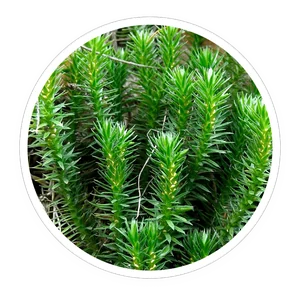
Huperzine A (from Huperzia serrata)
An acetylcholinesterase inhibitor: it slows acetylcholine breakdown, amplifying cholinergic signalling — and generating the formula’s most important safety questions. In eye research it has been studied for lowering intraocular pressure via muscarinic receptors and for retinal neuroprotection in animals. In cognition research the pharmacology is better characterised.
Two things follow. This is the ingredient most likely to produce a felt effect on attention, which may explain reports of improved clarity. It is also a drug-interaction risk: anyone taking cholinesterase inhibitors, certain glaucoma medications, or facing anaesthesia should not add an unquantified dose without medical advice. Huperzine A analysis and the safety page.
The two EyeFortin botanicals
Coleus forskohlii (root extract)
The source of forskolin, which raises cyclic AMP — and the ingredient whose eye research is most often misrepresented. The real study is an open-label trial of 1% forskolin eye drops in open-angle glaucoma that reported lower intraocular pressure. Drops applied to the eye, in people with glaucoma, with no placebo group.
Swallowing a diluted root extract in a blend is a different intervention. Forskolin also relaxes smooth muscle and affects platelet function, worth knowing if you take anticoagulants. Coleus article.
Eyebright extract (Euphrasia officinalis)
A traditional European herb for eye complaints, with centuries of folk use and almost no modern oral evidence. The most relevant laboratory work examined an eye-drop formulation containing chamomile and eyebright and found anti-inflammatory and antioxidant activity in human corneal cells under UVB stress. A bench study of a topical product, not a trial of an oral supplement.
Eyebright’s traditional applications were topical — compresses and washes — consistent with the absence of oral trials. Its presence here is heritage-driven. Eyebright article.
The EyeFortin 500 mg blend problem
Eight ingredients share 500 mg, and the split is not published — which makes every dose comparison on this page approximate by definition.
Suppose the blend is divided evenly: 62.5 mg each. Human taurine studies have used gram doses, so 62.5 mg would be a couple of percent of those. Huperzine A at 62.5 mg of a 1% extract would be about 0.6 mg of alkaloid — within the range used in cognitive research. But if the blend is weighted toward taurine, that figure could be a tenth of it. This is not academic: it is the difference between a sub-threshold dose and a pharmacologically active one.
Two honest conclusions. The formula is not dangerous because it is undisclosed, and it is not effective because it is undisclosed. It is unverifiable — and unverifiable is not a word that should cost $69 a bottle without the buyer knowing it.
What is not in the EyeFortin formula
No lutein, no zeaxanthin, no bilberry, no omega-3, no vitamin C, vitamin E or zinc. For a vision-marketed product, that omission is the most consequential fact on the label.
| Ingredient common in eye supplements | In EyeFortin? | Why it usually appears |
|---|---|---|
| Lutein | No | Macular carotenoid; AREDS2 trial evidence in AMD |
| Zeaxanthin | No | Companion carotenoid; macular pigment density |
| Bilberry / anthocyanins | No | Traditional vision support; small eye-fatigue trials |
| Omega-3 (EPA/DHA) | No | Retinal structural lipid; mixed trial evidence |
| Vitamin C | No | Antioxidant; part of the original AREDS formula |
| Vitamin E | No | Antioxidant; part of the original AREDS formula |
| Zinc | No | Cofactor in retinal metabolism; part of AREDS |
| Niacin | Yes — 16 mg | Metabolic coenzyme support |
| Vitamin B6 | Yes — 2.5 mg | Nerve and vascular metabolism |
None of those nutrients is a cure, and diet covers most of them for most people. But if a reader’s goal is “the nutrients with the best eye-health evidence”, this formula is not where they live. Our nutrition guide explains what each one does.
EyeFortin quality and testing
No certificate of analysis, no batch number and no third-party testing disclosure is published anywhere we could find. Affiliate pages reference cGMP manufacturing, but the product’s own materials do not name a facility, and the label lists a distributor rather than a manufacturer.
That is the norm rather than the exception in this tier, and it is the clearest argument for buying eye nutrients from brands that publish COAs — usually the larger pharmacy-shelf manufacturers. If independent testing matters to you, and for a proprietary herbal blend it reasonably might, this product will not satisfy that requirement.
Ingredient questions
Frequently asked questionsHow many ingredients are in EyeFortin?
Ten actives: niacin, vitamin B6, L-glutamic acid, L-tyrosine, taurine, alpha GPC, D-aspartic acid, coleus forskohlii, eyebright and huperzine A — plus glycerin, water, two natural flavours, purple carrot powder and potassium sorbate as excipients.How much taurine is in EyeFortin?
Unknown. Taurine sits inside a 500 mg blend shared with seven other ingredients. Even division would give about 62 mg — far below the gram-level doses used in human taurine research.Does EyeFortin contain lutein or zeaxanthin?
No. Neither appears on the current label. Articles that list them are describing a different formula, and there are many such articles.Is EyeFortin natural?
Its actives are vitamins, amino acids, plant extracts and an alkaloid, so “natural” is fair descriptively. It is preserved with potassium sorbate and flavoured with natural fruit flavours, and we could verify no organic or non-GMO certification.Are the doses high enough to matter?
For the two vitamins, yes at a nutritional level. For the blend, the question cannot be answered from the label — which is the central problem with the formula.Which ingredient is most likely to cause a side effect?
Huperzine A, because it has a real pharmacological action on acetylcholine. Niacinamide can cause mild warmth or headache, and some users report early digestive discomfort from the liquid base.
How many ingredients are in EyeFortin?
How much taurine is in EyeFortin?
Does EyeFortin contain lutein or zeaxanthin?
Is EyeFortin natural?
Are the doses high enough to matter?
Which ingredient is most likely to cause a side effect?
References
- National Institutes of Health, Office of Dietary Supplements. Niacin — fact sheet for health professionals. Source
- National Institutes of Health, Office of Dietary Supplements. Vitamin B6 — fact sheet for health professionals. Source
- Jung KI, Kim YC, Park CK. Dietary niacin and open-angle glaucoma: the Korean National Health and Nutrition Examination Survey. Nutrients. 2018;10(4):387. Source
- Kamanna VS, Kashyap ML. Mechanism of action of niacin. American Journal of Cardiology. 2008;101(8A):20B–26B. Source
- Sofi F, Marcucci R, Bolli P, et al. Low vitamin B6 and folic acid levels are associated with retinal vein occlusion independently of homocysteine levels. Atherosclerosis. 2008;198(1):223–227. Source
- Thoreson WB, Witkovsky P. Glutamate receptors and circuits in the vertebrate retina. Progress in Retinal and Eye Research. 1999;18(6):765–810. Source
- Jackson CR, Ruan GX, Aseem F, et al. Retinal dopamine mediates multiple dimensions of light-adapted vision. Journal of Neuroscience. 2012;32(27):9359–9368. Source
- Neri DF, Wiegmann D, Stanny RR, et al. The effects of tyrosine on cognitive performance during extended wakefulness. Aviation, Space, and Environmental Medicine. 1995;66(4):313–319. Source
- Froger N, Moutsimilli L, Cadetti L, et al. Taurine: the comeback of a nutraceutical in the prevention of retinal degenerations. Progress in Retinal and Eye Research. 2014;41:44–63. Source
- Arfuzir NN, Agarwal R, Iezhitsa I, et al. Taurine protects against retinal and optic nerve damage induced by endothelin-1 in rats via antioxidant effects. Neural Regeneration Research. 2018;13(11):2014–2021. Source
- Naber M, Hommel B, Colzato LS. Improved human visuomotor performance and pupil constriction after choline supplementation in a placebo-controlled double-blind study. Scientific Reports. 2015;5:13188. Source
- Topo E, Soricelli A, Di Maio A, et al. Evidence for the involvement of D-aspartic acid in learning and anxiety behaviors. Frontiers in Psychology. 2016;7:1915. Source
- Majeed M, Nagabhushanam K, Natarajan S, et al. Efficacy and safety of 1% forskolin eye drops in open angle glaucoma — an open label study. Saudi Journal of Ophthalmology. 2015;29(3):197–200. Source
- Bigagli E, Cinci L, D’Ambrosio M, et al. Pharmacological activities of an eye drop containing Matricaria chamomilla and Euphrasia officinalis extracts in UVB-induced oxidative stress and inflammation of human corneal cells. Journal of Photochemistry and Photobiology B. 2017;173:618–625. Source
- Yu P, Dong WP, Tang YB, et al. Huperzine A lowers intraocular pressure via the M3 mAChR and provides retinal neuroprotection via the M1 mAChR. Annals of Translational Medicine. 2021;9(4):332. Source
- Wang R, Tang XC. Neuroprotective effects of huperzine A: a natural cholinesterase inhibitor for the treatment of Alzheimer’s disease. Neurosignals. 2005;14(1–2):71–82. Source
- Zhao ZC, Zhou Y, Tan G, et al. Research progress about the effect and prevention of blue light on eyes. International Journal of Ophthalmology. 2018;11(12):1999–2003. Source
- Age-Related Eye Disease Study 2 Research Group. Lutein + zeaxanthin and omega-3 fatty acids for age-related macular degeneration: the Age-Related Eye Disease Study 2 randomized clinical trial. JAMA. 2013;309(19):2005–2015. Source
- U.S. Food and Drug Administration. Dietary Supplements: guidance and regulatory information (DSHEA). Source
Links open in a new tab. Citations are provided for ingredient and background research only. No published trial has tested the finished EyeFortin formula.
See the product these ingredients belong to
The vendor’s page lists the same ten ingredients with current package prices and the 60-day refund terms. Our assessment of the formula is above; theirs is there.
View current package optionsOpens the vendor’s checkout page in a new tab. This site is independent and not the manufacturer.